
It’s only May and my nose has done more running than Mo Farrah.
When you think of summer you generally picture hazy sun filled days spent on the beach, out in the countryside or down the local beer garden.

Whilst it’s the season that many enjoy and long for most, for others it conjures up images of running noses, streaming eyes, sore throats, persistent itching and sneezing.
Hay fever is one of the most common allergic conditions with approximately 10 million people in the UK blighted by it each year. Although you’re more likely to develop hay fever if you have a family history of allergies, particularly asthma (cheers dad!) or eczema, the bad news is that you can develop it at any time.
The internet is awash with home remedies, prevention tips and cures to beat this seasonal irritation. Rather than offer advice that my mate’s nan swears by; I’ve done some digging to attempt to work out what we actually know to true!
In the early 19thcentury it was assumed that freshly cut grass was causing the problem, thus leading to the name. You know what they say about assuming though… James Bostock, a British Doctor and sufferer of the symptoms, managed to correctly identify that hay was not the cause but still missed the point slightly and took a stab at the heat being the cause.
Step forward Charles Blackley, another hay fever suffering scientist. In 1859, Charles was ‘spot on the money’ in figuring that pollen was to blame and even managed to identify that lighter pollen from grass/trees was more likely to induce symptoms as it became air easier. When I said, ‘spot on’, Charles didn’t quite get it 100% and figured that it caused by a result of toxins in the pollen.
Today we know that certain kinds of pollen cause overreactions in the immune system which leads the body to treat it as a virus, which triggers those lovely symptoms.
Sweden has given us lots of little joys: Ikea, Meatballs and Zlatan Ibrahimović spring to mind. They also offered hope to long time sufferers with research that suggested it was most likely to disappear in your 50’s. Much like an Ikea instruction manual that advises a build time of 20 minutes and no previous joinery experience, you can’t believe everything you read. Research has suggested that people can go most of their life with no symptoms and experience them for the first time in their 30’s/40’s.
Generally speaking, although cases are unfortunately on the rise, half the people with hay fever typically find their struggle reduces with age and for an enviable 20%, they even disappear.
This one sounds like an old wives’ tale to me and research suggests that there’s no need to be busting out any rain dances to catch a break from sneezing.
Light to moderate rainfall can actually help but heavy rain can have the adverse effect. In South Korea data shows a rise in outpatient visits with symptoms following periods of heavy rain/typhoons.
10cm is the magic number apparently.
A 14-year review of meteorological data in the US found that pollen levels fell after less than 10cm of rain but rose after exceeding it.
We’re entering into difficult territory here. The short version is that it really depends on where you live, which grasses are common in the environment and which you’re allergic to.
The standard advice to sufferers is to stay indoors and wait until the evening to venture out, just like vampires but for different reasons. Staying inside can obviously help but it’s really that simple.
Levels of pollen across plants/grasses such as mugwort and ragweed vary greatly. Mugwort pollen is lower at night but ragweed is can actually be higher. How easily the pollen becomes airborne and how far it travels, really does make this a tricky one.
Honey has long been promoted as a home remedy to ease symptoms but there’s actually very little research to support it. In fact, the best case for honey is from a small pilot study in Finland in which suggested participants found a ‘marginal difference’.
Gin seems to be a newer suggestion, it’s one that I like and intend to look into rather selflessly to personally further science. As alcohol contains histamine and sulphite, the Met Office recommends you avoid it as these are two of the main causes of the summer sneezes.
Can’t see that happening? No neither can I.
Where Gin actually may be more promising is that according to my new favourite research foundation, Asthma UK, strong spirits are relatively low in these chemicals and pure Gin often contains no histamine at all.
Good old reliable Gin.
Major changes could occur to the life science industry over the next few years, after 22 partnerships have been announced with UK contract research organisations (CROs) in a bid to boost research and development (R&D) in the sector.

Medicines Discovery Catapult has announced these CROs will join its Virtual R&D Discovery Services platform. It believes that by combining private sector CROs with expert laboratories, this will improve the country’s international competitiveness by encouraging the discovery of new drugs and treatments.
Dr Peter Simpson, chief scientific officer of Medicines Discovery Catapult, said: “Our aim is to support SMEs (small and medium-sized enterprises) through convenient access to excellent assays and specialist drug discovery services.”
Following the move from a fully-integrated model of drug discovery to a virtual platform, outsourcing these achievements, life sciences has become dependent on SMEs for their innovation and discovery.
However, Britain could find itself falling behind other countries in the future, as 42 per cent of biotech SMEs has five staff at most, despite the fact they need top-quality scientific knowledge and skills, as well as access to the best technology in the field. Therefore, there could be more life science vacanciesavailable to provide this expertise, as a result of this partnership.
Discovery Services helps by matching SMEs with CROs, at the same time making sure intellectual property is kept secure and providing Medicines Discovery Catapult’s knowledge to the partnerships.
The advantage of this to CROs is that they can then gain better access to the market, allowing them to reach customers they would otherwise not have been able to connect with.
They will also benefit from a full project review, assessment of data packages, management of delivery plans, support when it comes to interpreting and assessing data, and advice on development plans, as well as gap analysis.
Mr Simpson stated: “UK-based CROs can meet a wide range of needs for drug discovery innovators, and we are delighted to work in partnership with them to provide advice and project management to help ensure these relationships are successful.”
The Virtual R&D platform is part of the UK’s Life Sciences Industrial Strategy. This report, which was produced by the life sciences sector for the government, is aimed at helping Britain become a ‘world-leading position’ in the industry over the next 20 years.
In the report, John Bell, Regius professor of Medicine at the University of Oxford and chairman for the Strategic Coordination of Health Research, stated the government’s support for the industry over the next five years is essential.
“With that in place, the strategy will emerge as a dynamic set of actions that will ensure the most desirable outcomes for the economy, industry and the NHS,” he commented, adding that the strategy is a “unique opportunity for the country”.
Medicines Discovery Catapult is helping this outcome turn into a reality through its Virtual R&D, which will support the discovery of new drugs.
Dr Kath Mackay, director of Ageing Society, Health & Nutrition of Innovate UK, said this support is crucial for the sector, adding: “Bringing together academia, SMEs and CROS will drive drug discovery with benefits for society and the economy.”
In a breakthrough study, researchers believe that dogs can sniff out lung cancer which may aid early stage detection of the disease.

Presenting their findings over the weekend at the 2019 Experimental Biology meeting, researchers say dogs’ highly evolved smell receptors can accurately pick out blood samples from people with cancer with almost 97 percent accuracy, potentially leading to new cancer-screening approaches that are less expensive and invasive.
Dogs have smell receptors that are 10,000 times more accurate than humans, making them highly sensitive to odours that humans could never perceive.
“Although there is currently no cure for cancer, early detection offers the best hope of survival,” said lead researcher Heather Junqueira in a statement. “A highly sensitive test for detecting cancer could potentially save thousands of lives and change the way the disease is treated.”
Using a form of positive reinforcement behavioural training called clicker training, the team taught four 2-year-old beagles to distinguish between noncancerous blood serum and samples taken from patients with lung cancer. Though the aptly named Snuggles wasn’t up to the test, the other three dogs correctly identified lung cancer samples 96.7 percent of the time and normal samples 97.5 percent of the time by scent alone.
“This work is very exciting because it paves the way for further research along two paths, both of which could lead to new cancer-detection tools,” said Junqueira. “One is using canine scent detection as a screening method for cancers, and the other would be to determine the biologic compounds the dogs detect and then design cancer-screening tests based on those compounds.”
This study paves the way for a larger scale research project designed to explore the use of canine scent detection as a tool for detecting cancer biomarkers, ultimately leading to their identification,” reads the yet-to-be-published study abstract.
BioScentDx, the company responsible for the research, hopes to use canine scent detection to further develop non-invasive techniques for screening cancer and other life-threatening diseases
Agenda Life Sciences have always been advocates of openness and communication on animal research. As a former in-vivo researcher, I maybe feel more passionate about this than most. We’ve had a great example in popular media recently of a celebrity speaking about animal research in a less than positive light. Unfortunately, some of the points he made were not accurate and its disappointing that with our industry’s efforts to be more open and informative, these myths still come to the public’s attention. And then there’s social media, a fantastic tool for sharing information (and opinions) but typically something our industry has not used to its full potential. We want to be open, but not that open, right? Wrong!
In the spirit of openness, Agenda Life Sciences hosted an Ask me Anything session on Reddit. We encouraged anyone to ask us anything about what it’s like to be an animal technician in biomedical research. There I was on Thursday, behind my laptop, prepared to receive any question. Maybe some would be negative or controversial, overly emotive or difficult to answer. Although I didn’t have to answer every question, I did aim to do that as ‘cherry picking’ questions to avoid the challenging ones would not truly be the objective of openness. The reason we chose Reddit for the session was because it would attract questions from all walks of life, again very open. A peripheral benefit was that I could do it all with a cup of tea to hand.
I certainly was not trying to change people’s opinions, but I would like to think I can share my experiences to inform people and encourage opinions that are based on truths. I hope the session was informative for all those who posted questions or watched the discussion evolve. If you missed it, here’s an overview of our Reddit session with a few of the upvoted questions and replies:
There are many different species used in biomedical research and choosing the best model allows researchers to gather the most scientifically valid data from the fewest number of animals possible. So, a very important question, and why we have legislations to guide our choices on which species to use.
Firstly, regardless of species, we are only permitted to use an animal for research purposes if there is no scientifically valid alternative. If the research progresses to an animal model, the legislation further specifies that we must use a species “with the lowest capacity to experience pain, suffering or lasting harm and are most likely to provide satisfactory results” (Standard Condition 4). Research on monkeys, cats and dogs is more strictly regulated. Dogs, cats or primates are only used when no other species are suitable.
The legislation has helped us limit our choice to the most applicable options but there is still an element of choice in assessing which species are most likely to provide satisfactory results. For this we must consider the animals biology and what we already know from previous research. What will best mimic a disease? Which species is most similar to the human for each specific project? Here are a couple of examples on why a certain species is chosen for certain research:
Because ferrets are domesticated and their oestrous cycle is similar to the human menstrual cycle, they have become important in reproduction research.
Nematodes (worms), despite having a relatively low number of cells, still have a nervous system and this makes them ideal for studying the development, or disorders of, nerve cells.
Mice are the most commonly used vertebrate animal in medical research, particularly in the study of genetic disorders. 80% of human genes are exactly the same as those found in mice, at least a further 10% are very similar, making them the most appropriate model for exploring how we can prevent, treat or even cure genetic diseases. With a lifespan of around 2 years, we can study the whole life progression of a disease or a treatment in a relatively short time in the mouse. With an ageing human population this is particularly attractive attribute, we can study geriatric disorders in mice much quicker than in other species.
Agenda Life Sciences – Reply
For me, the most important thing is not a formal qualification, but having a genuine love for animals. As I mentioned in my reply to dantooine1977 when he/she asked about surgery, I want to make sure that any animal technician has the animals’ welfare as their priority. So, empathy and compassion are key skills.
Requirements for a formal qualification depend on what level of entry you are looking at. An apprentice animal care technician can enter the industry with good GCSE’s and some hands on experience with animals. A junior or trainee technician with Agenda would need a L2 Diploma (or higher) in an animal related subject. There are lots of colleges and universities offering further education and higher education courses in animal care, animal science, animal management and bioveterinary sciences. All these would be good subjects to look for if you are interested in a career as an animal technician.
Almost all medical treatments have been made possible by animal research. It would be impossible to list them all but I can highlight some of the major medical advances over the past 120 years:
In my experience, surgery is avoided if there are less invasive methods to get results. Never-the-less there are some times when this is unavoidable. I have seen both non-recovery and recovery surgeries (and by non-recovery, I don’t mean that the animal died due to the surgery, but it is a planned euthanasia as part of the research work).
In both scenarios there were a team of fully trained staff present throughout, including qualified veterinary surgeons, NACWO (Named Animal Care and Welfare Officer) and dedicated care/recovery staff. I particularly like that the person performing the surgery is not the only professional focussing on the animal’s vital signs and anaesthesia, to have a second pair of eyes to solely monitor the welfare of the animal throughout the procedure greatly minimises the risk of adverse events, pain or inadequate anaesthesia.
Thank you for recognising, and including in your question, that the animal was treated humanely. Not just specific to during surgical procedures, I have worked with many animal care professionals and what has always been apparent to me is their compassion and empathy towards the animals they work with. Animal technology is a very caring profession and we actively seek to recruit people with a love for animals. If you were to choose someone to care for your animal (be it a pet or a research animal) you would want to trust the person had the animals welfare as their top priority, right? That’s what I look to achieve in all the teams I have worked with, even to the point that ‘displaying empathy and compassion’ was a specific point in the training regime and the sign-off to perform any task involving an animal.
If I could avoid surgery and replace it with a less invasive technique I would, but if there is no alternative the surgery is performed to the highest standard and by trained professionals in specialised, licenced research establishments.
I have been fortunate to be involved in projects which look at alternative approaches to animal surgery. For example, heart rate monitors which were once surgically implanted can now be applied dermally to dog skin if we shave a little bit of their fur. Instead of inserting electrodes or catheters into the dogs arteries, we can use adhesive patches attached to the skin to detect heart rate over a prolonged period without any surgical intervention. The whole set-up is externalised and protected by a fabric jacket so the animal can be returned to its home environment amongst a group of other dogs and express normal, ambulatory behaviour whilst the researcher collects heart rate data externally. A good alternative which benefits both the animals and the science.
Q: What kind of duties do animal technicians have?
The average day for an animal technician includes a variety of tasks, including:
Agenda Life Sciences is delighted to announce that our in vivo facility at Alderley Park, Cheshire, has received its GLP (Good Laboratory Practice) certificate.

This is something several of our clients requested and we are pleased to be able to meet their needs. This will allow us to provide technical support to Customers wishing to conduct GLP-compliant, in vivo toxicology and genetic Toxicology studies in order to satisfy Pharmaceutical, Chemical and Agrochemical regulatory requirements. This is also an important addition to the growing portfolio of services available to companies wishing to bring their drug development activities to the thriving biosciences ecosystem at Alderley Park.
Good laboratory practice is a set of principles that assure the quality and integrity of non-clinical laboratory studies that are intended to support research or marketing permits for products regulated by government agencies.
For more information on our facility management or recruitment services contact our team on 08456 44 55 45 or via email at jobs@agendalifesciences.co.uk
We’re heading to IAT Congress 2019!

If you are attending the Institute of Animal Technology (IAT) Congress this year, why not drop by the Agenda stand. The team have been working hard in preparation for this year’s show and we are looking forward to another great meeting held by the IAT.
Agenda Life Sciences specialise in life science recruitment, contract staffing, training and consultancy and the provision of facility management services.
Don’t forget to visit Agenda on stand number 28 in the trade exhibition hall and hear the latest from our team of life science specialists and get involved with our game and find out about The Agenda Advantage!
We are looking forward to seeing technicians, clients and industry colleagues at the meeting and networking with likeminded professionals from the life science industry.
The main purpose of the Congress is to introduce Animal Technologists to the latest developments in all aspects of animal-based research and technology.
For more information about IAT Congress visit www.iat.org.uk.
Next week, Agenda Life Sciences are attending to Baltimore for the SOT Annual Meeting in partnership with Alderley Park Limited.
With more than 80 scientific sessions, 2,100 abstract presentations and over 300 organisations exhibiting at the meeting, it promises to be another great event supporting the toxicology and toxicologist community.
The SOT annual meeting is where over 6,000 scientists and industry leaders meet to share the latest knowledge in toxicology.
For more information on the meeting visit their website.
Agenda are feeling the love this Valentine’s day and want to share it with you! Whether you are looking for a new job or are considering partnering with a recruitment agency in order to fill a vacancy, we can help you!

Below are some of the reasons why Agenda is the trusted recruitment partner of so many life science organisations and why so many candidates come to Agenda first to help them find their ideal career move.
For more information on our recruitment services, contact us today on 01964 671791 or email us at hello@agendalifesciences.co.uk
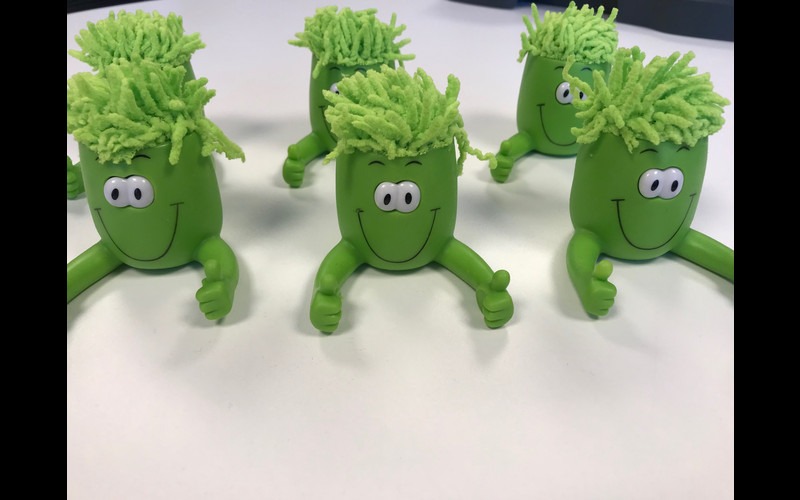
Agenda are heading to London for the annual IAT West Middlesex Trade Day next week. Agenda are pleased to be supporting a well organised event by the West Middlesex branch of the IAT (Institute of Animal Technology) with excellent opportunities for networking with colleagues from the life science industry and to meet candidates and technicians looking for work in and around the London area.
If you are attending the event, drop by our stand for information on our latest vacancies and to grab yourself some goodies from our stand. There is also chance to win in our free prize draw.
If you are unable to attend the event but would like recruitment advice, contact our team today on 08456 44 55 45.
Agenda are extremely proud to present a cheque for our 2018 charity fundraising, during which we raised a total of £1718.91 to Parkinsons UK!
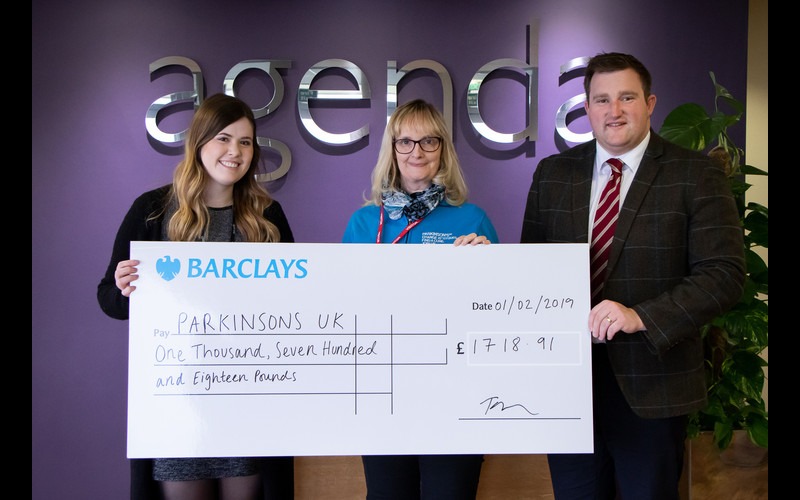
2018 saw a variety of fundraising activities with lots of members of staff engaging with the fundraising outside of work hours as well as in the office! We had people running 10Ks, riding the longest (and fastest!) zipline in Europe, as well as our usual dress up days, bake sales and holiday raffles.
Tracey from Parkinsons UK was thrilled with the amount we presented to her, as she said that the charity is purely funded off charity donations. Parkinsons UK is such a great cause and we really enjoyed fundraising for them throughout the year of 2018.
Well done, Team Agenda – what an amazing year.

Agenda successfully passed our audits for 22301 Business Continuity Management and BS10012 Personal Information Management. Over the course of the last 2 months Agenda have successfully passed surveillance audits for the following certification. BS10012 was adopted as the framework to manage GDPR and Data Protection Act 2018 compliance as it aligns to the principles of GDPR and DPA2018.
“As part of Agenda’s overall governance and assurance regime we firmly believe that having externally verified process and procedures by a UKAS accredited certification body to international recognised standards is an important part of the process.” Chris Withers Head of IT and Compliance, Agenda
Agenda are proud to announce that they will be supporting The Teenage Cancer Trust as their charity of the year for 2019. Every year Agenda supports one charity throughout the year with various fundraising activities and the charity is voted for by the staff. This year the vote was easily won by the Teenage Cancer Trust and we will be supporting it in memory of a colleague that sadly lost their battle with cancer last year.
With events and activities planned every month for 2019, this year hopes to be an excellent year for fundraising for Teenage Cancer Trust.
Teenage Cancer Trust has grown to become a global leader in the field of young cancer care, our pioneering model admired the world over. The lives of thousands of young people have been transformed by specialist care and support by highly experienced experts. For more information on their story and the support they provide visit their website www.teenagecancertrust.org